
Old Books, New Books, Living Books

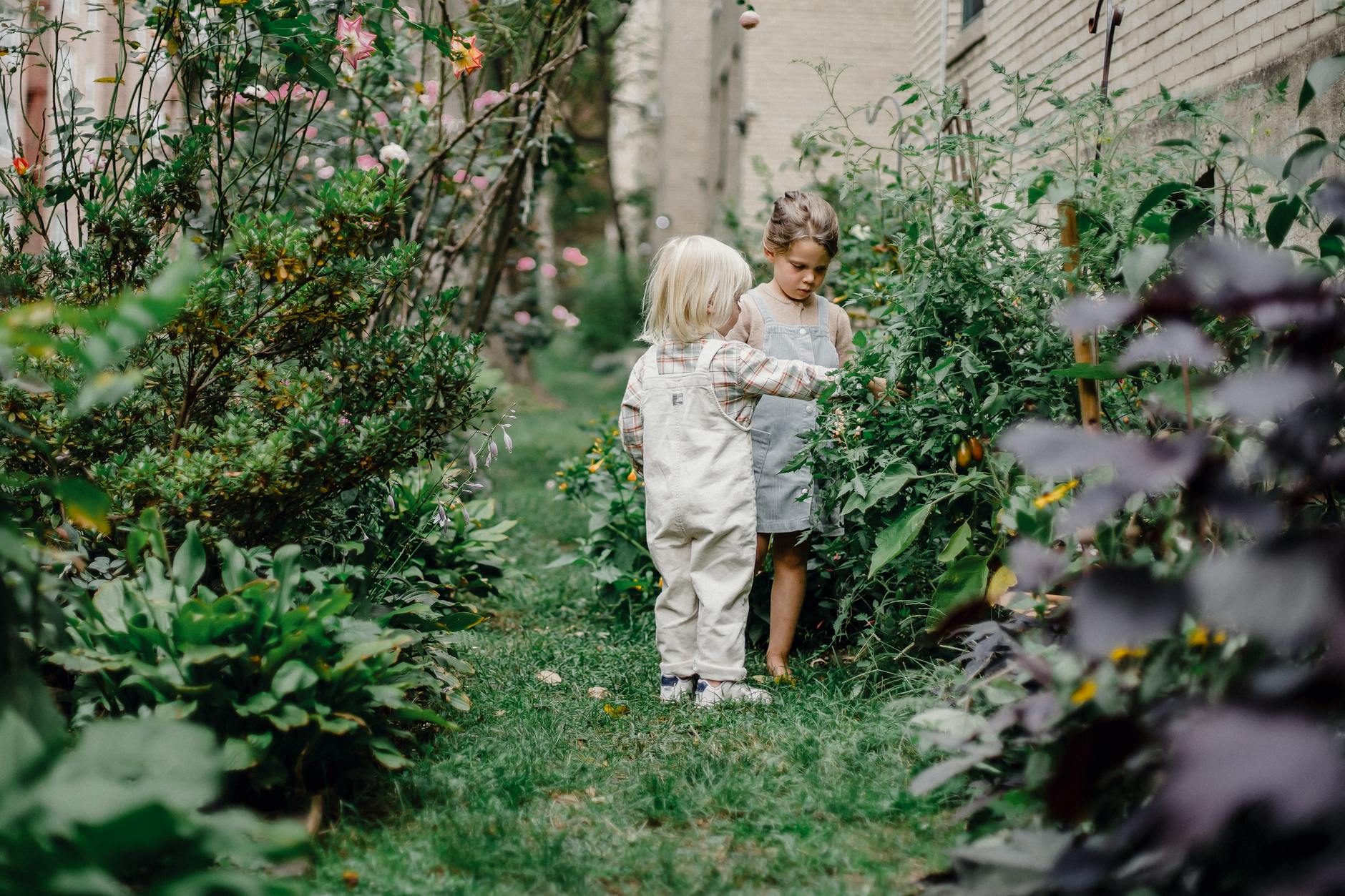
Photo by Alexander Grey on Pexels.com

You are ready to begin your Charlotte Mason Home School journey and there’s so much to learn! One of the big ideas to stump many people is living books. Are all living books old? Are all old books living books? How can I tell a living book from one that is not a living book. What the heck is twaddle? Are all new books twaddle? Where do I find these elusive Living Books?

You aren’t alone in your confusion. We all pretty much have to go through this learning process, and figuring it our for our selves, because what is good for one person may not fit for the next person, so the definition of Living Books is as individual as your family. An example that stands out is my daughter being annoyed while going through a Roman history book where everything was about a battle and boooooring. It was absolutely dead to her. For my son, a book with heroes in battle is the ultimate living book, so he liked that part. While all living books have some things in common, not all books grab the imagination of all people, so we have to find what fits our home, and our kids and ourselves.

Defining Terms

Living books are books written in a conversational, narrative manner, that appeals to the reader in a friendly or even confidential way. The language used is accessible and understandable, but not dumbed down. The ideas or story are presented clearly, so that you can picture the events or facts in your mind in a memorable way. Other words that describe Living books could be wholesome, engaging, healthy and edifying. Living books encourage the reader to learn more or about the story or topic and to think and have opinions and emotions about the issues and events that have been presented.

Sometimes its easier to describe what something isn’t rather than what it is. Living books are not dull, dry or boring. Living books generally do not blatantly preach a specific point of view, but can often show an argument in favor of a specific point of view so well that the reader does become engaged with the point of view of the author. Living books do not encourage or glorify vice, disrespect or unhealthy thinking or life choices.

A Word About Non Fiction Books

Usborn or Eyewitness DK type books with great photos and short factual text blurbs can be fascinating to browse through, but as they are not written in narrative form, they are not generally considered Living books. If your children are used to many of their books being in this style of books, they may well have a big adjustment to living books because its a whole different style of writing and requires more thinking and understanding. These photo heavy books can be valuable learning experiences because of the amazing photography or charts/drawings, and information presentation, but they not living books.

Twaddle

The Oxford dictionary define twaddle as

trivial or foolish speech or writing; nonsense”

So twaddle in our usage is any nonsensical book that doesn’t spark joy, Some people think Dr. Seuss wrote twaddle, other people think Dr. Seuss wrote living books because of the rhyming, humor and engaging although simple stories. Some people think that Captain Underpants books are twaddle because they are not uplifting. Other people think the silliness and humor make them living books. As parents and stewards of our children, its up to us to decide where we draw the line.

Where to Get Started

There are many places to look to get you started on living books. Newbery and Caldecott award winning books are often wonderful living books. The website https://www.livingbookslibrary.com/ has a lot of good suggestions as well. Your local librarian often will have book suggestions by age or reading level and can help you find what you are looking for. Finally the Book Honey for a Child’s Heart by Gladys Hunt is a wonderful place to find more living books for your family.

Get Started Now!

So my best suggestion for you is to get started now! Don’t wait to find the perfect book but just get a couple that look good from Amazon or the library and see what you and your kiddos think, and go from there. Its much easier to steer a moving ship than to steer one that is standing still. 😀

I would love to hear how this process is going for you. Let me know in the comments!

Home school Moms, It’s Time to Kick Your Inferiority Complex

Great article by Annie Holmquist, home education graduate and education researcher, about how home ed parents are doing better than they think they are, on the Epoch Times

An Easy Start to Your Home School Year

So you have decided to take the plunge– you are going to start homeschooling your kids. You’ve read everything you can get your hands on, you’ve bought all the cute and fun supplies, you’ve told your extended family and tried to calm their concerns, you agonized over curriculum and deciding if your 5 year old should start now or next year…

And now you think you are ready. Before you take that first big step (or really any time after you have already started) I would like to share the very best home education advice I ever got. It’s saved my bacon more times than I can count, and I dearly wish I could remember who originally said it.

“Start out slow, and then ease up”

OK, take a breath and let it out slowly…….. and then read it again.

Start out slow, and then ease up”

For many home educators this is one of the hardest things… there is so much intensity about wanting to do it right and for many people that means doing it all.- if you are willing to put in the time to home educate your kids its a fair bet that you are pretty passionate about the results. And then our anxiety wants us to do it ALL THE TIME.

But doing it all, and doing it all right, and doing it all the time is not actually an attainable goal. If that’s what you are trying to do it will be overwhelming and really hard on the kids, and then they end up hating school. Ask me how I know? I did exactly this and had to learn a new way.

So I invite you to try a different way. If you have a little one just starting school, a few minutes a day is really all that is needed, One of my kiddos was very bouncy and ADHD and literally had an attention span that lasted 2 minutes when we started formal lessons at 6yo. We slowly expanded that to a more age appropriate level over the next few years but we did all the behavioral things to help, plenty of exercise, honored the child’s need to physically move, and slowly stretched it out, slowly adding subjects over weeks and months, and spreading them throughout the day.

Photo by Ylanite Koppens on Pexels.com

If you have older kids and the school year is just starting, you don’t have to jump into every book on the first day. Some of our best years have started with a first day of school tea party, where we reviewed what we are doing for the school year i.e. “this year we are studying the Greeks, and will study life science and learn to use a microscope and write even better than we did last year” and then read some poems and then just let them look at the new books, do an easy assignment or two and then we went to the park.

The next day when we started we just did a couple subjects and every few days added some new subjects/activities until we were at full capacity. After a few days off we would start slowly again, although building back up faster if we had only been off a short time. Slow and gentle takes the bite out of having to get back to work!

Here are some more ideas for an easy start to your home schooling year:

10 ways to start easy this homeschool year

Self Education

Self-education is the only possible education; the rest is mere veneer laid on the surface of a child’s nature. ~ Charlotte Mason

Compulsory Education, Anyone??

Knowledge which is acquired under compulsion has no hold on the mind. Therefore do not use compulsion, but let early education be a sort of amusement; you will then be better able to discover the child’s natural bent. ~ Plato

Monet’s Water Lilies Art Lesson

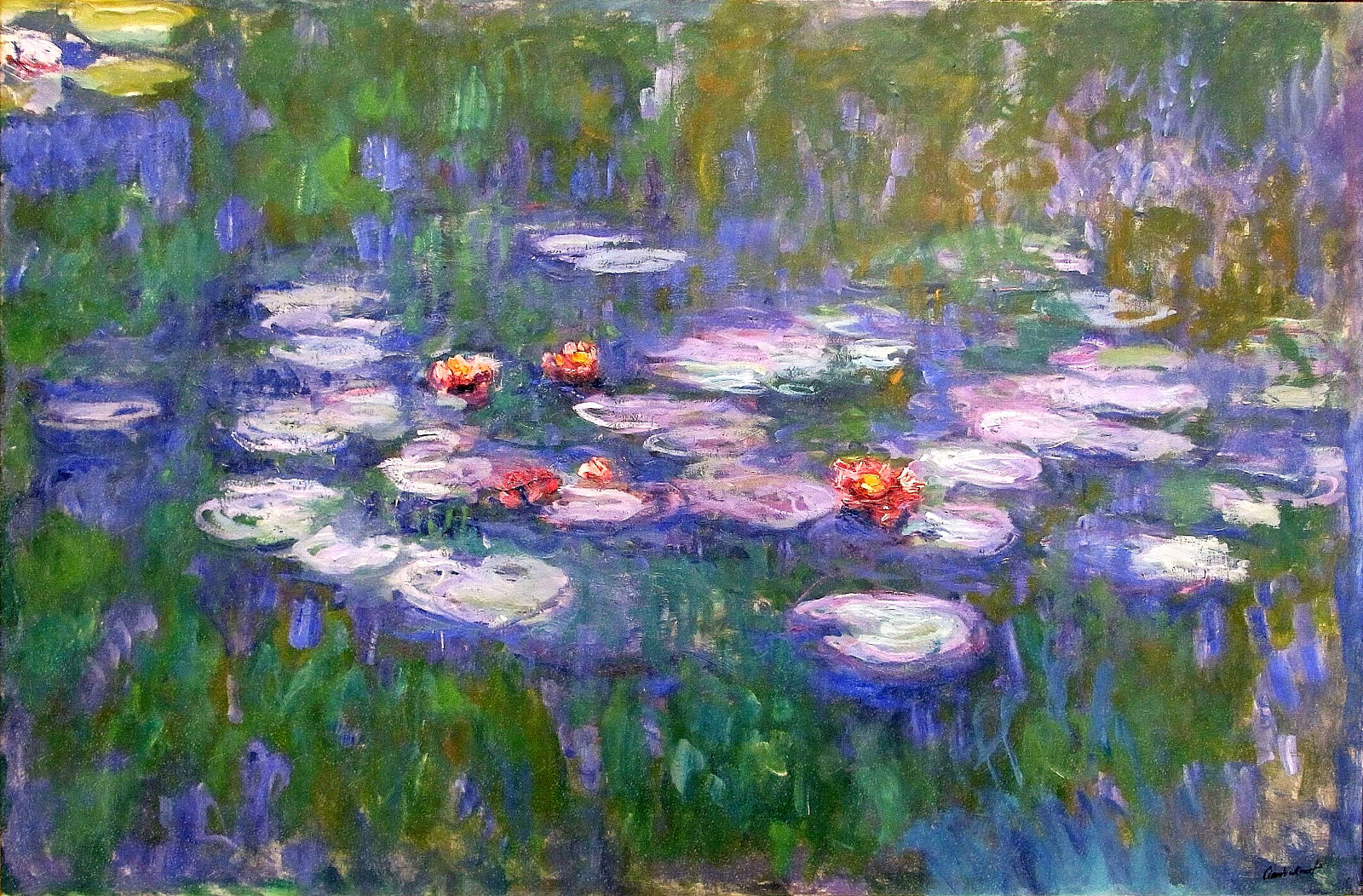
 This month we are studying Claude Monet and doing our own rendition of his Water Lilies in Chalk Pastel.
Join us in learning about the life of this fascinating artist, and a little bit about how to create a beautiful piece of art similar to his famous work. This lesson is suitable for children age 8 and up!

Learn about Monet’s life and Impressionism

This Wikipedia Article Includes lots of information about Monet’s experiences and a number of paintings to view and become familiar with Impressionism and Monet’s style.

Now, its time to create your own water lilies picture.

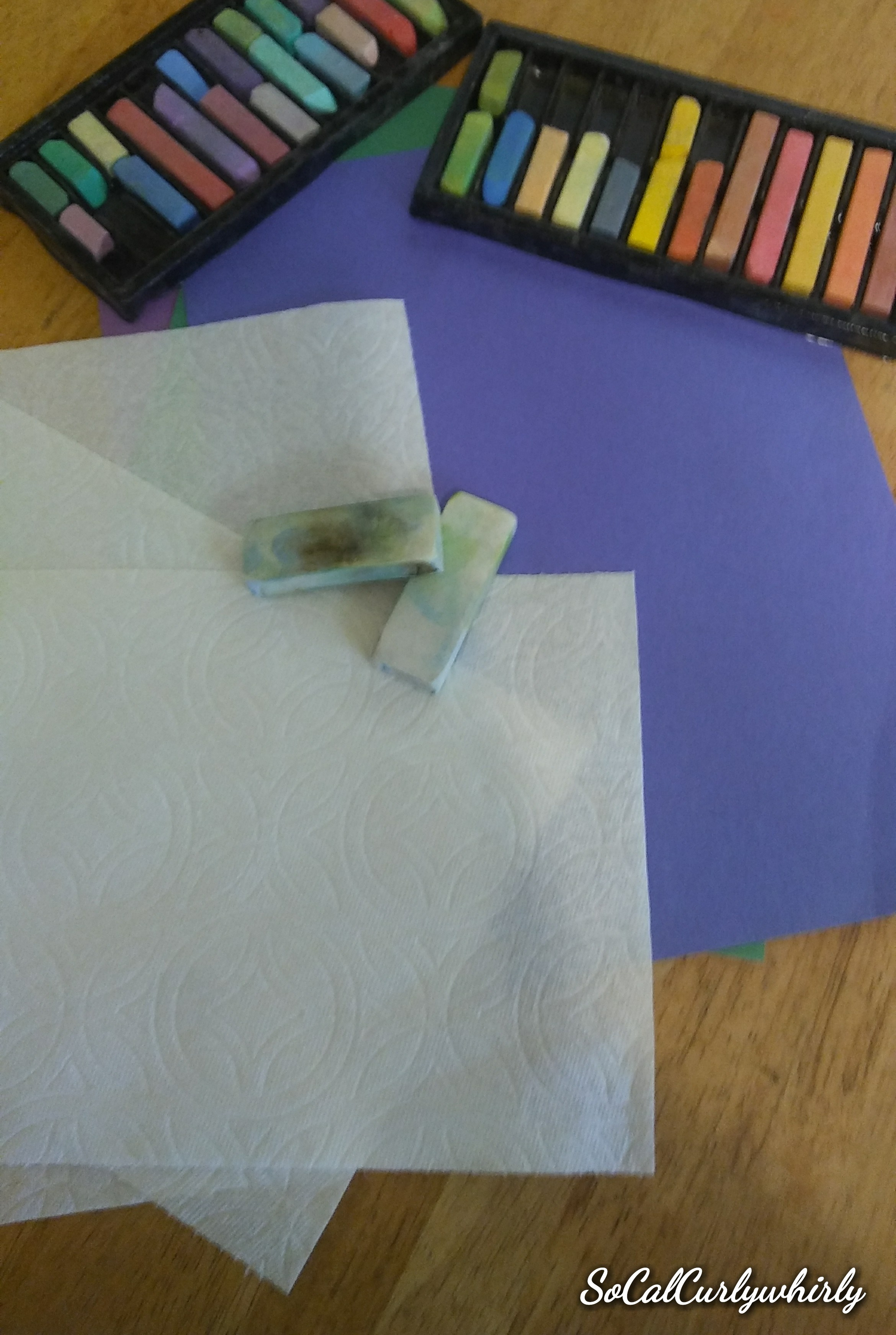
First gather your supplies-

Chalk Pastels at least 24 colors

Construction paper in green or blue

Paper towels to clean your hands and pick up any excess chalk dust

Magic Erasers For those little oops

Fixative so your picture doesnt smear and get rubbed off although for our purpoes hair spray works just as well

Now follow along as we make our water lilies 🙂

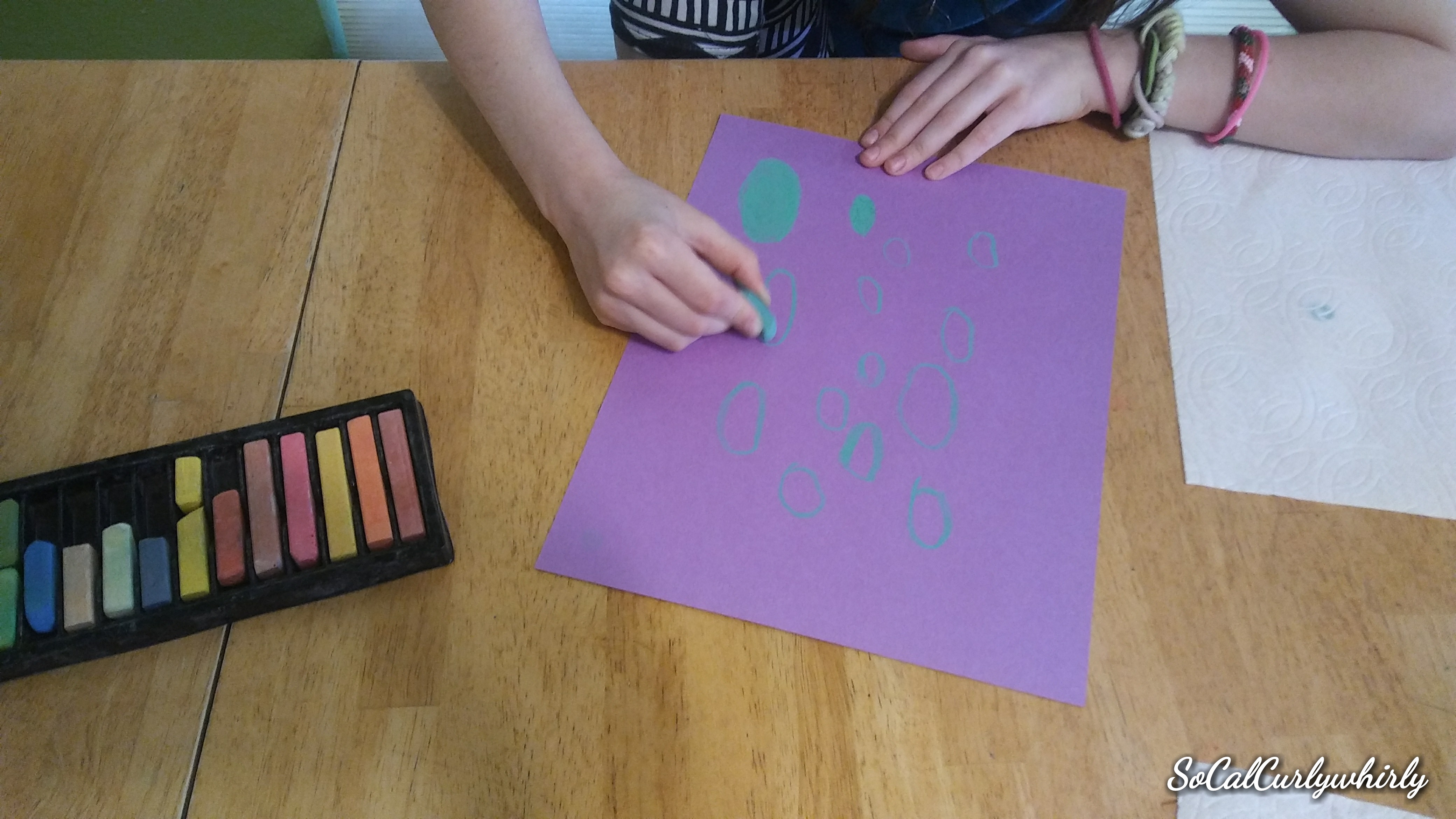
20180219_151424_Signature Here are our supplies ready to go. :) You can see our chalk pastels are well used. Don’t worry if they become broken… sometimes they are easier to use that way. If they become dirty from the dust of the other colors, just use your paper towel to rub the dust off– same with the erasers.
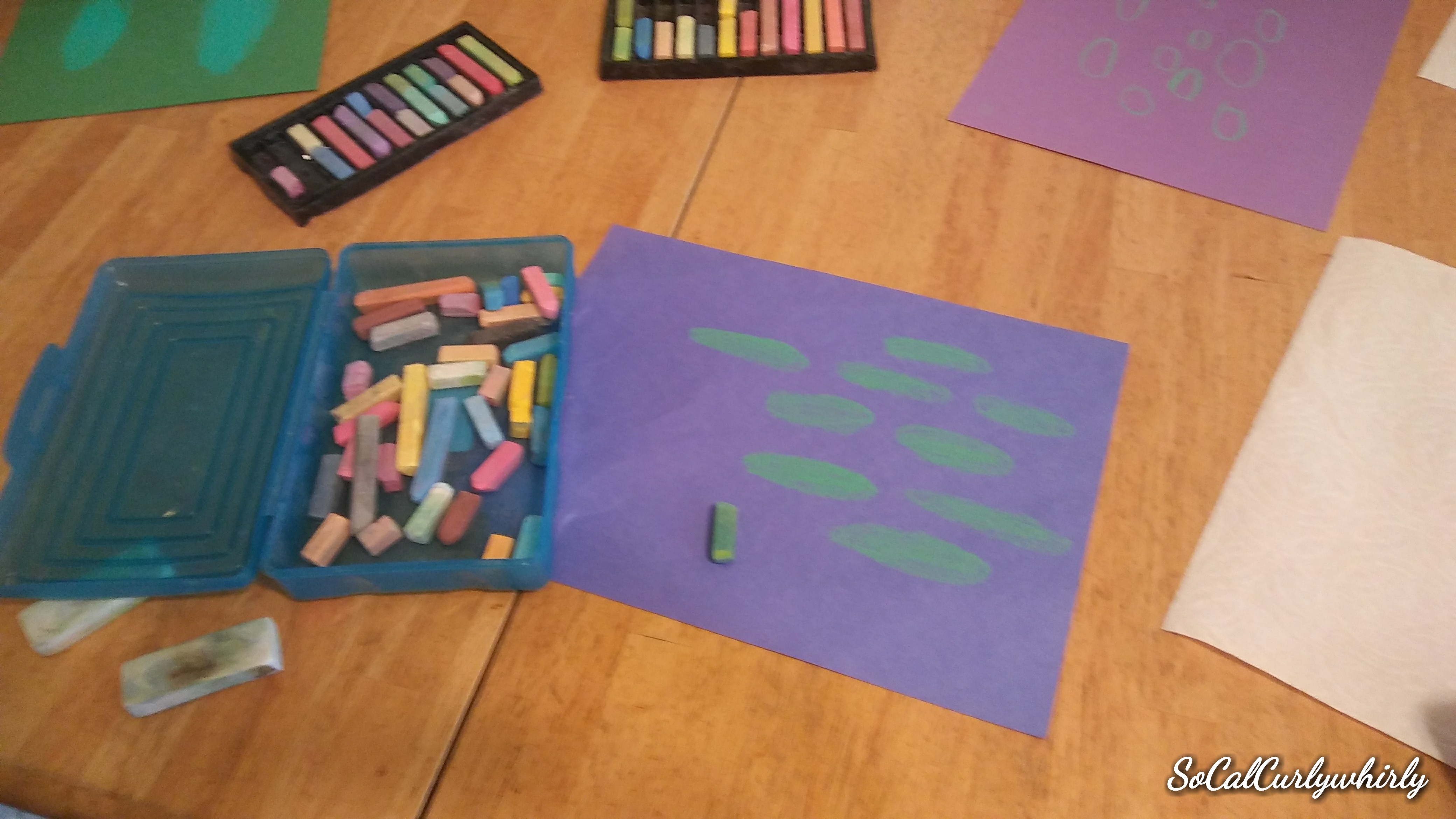
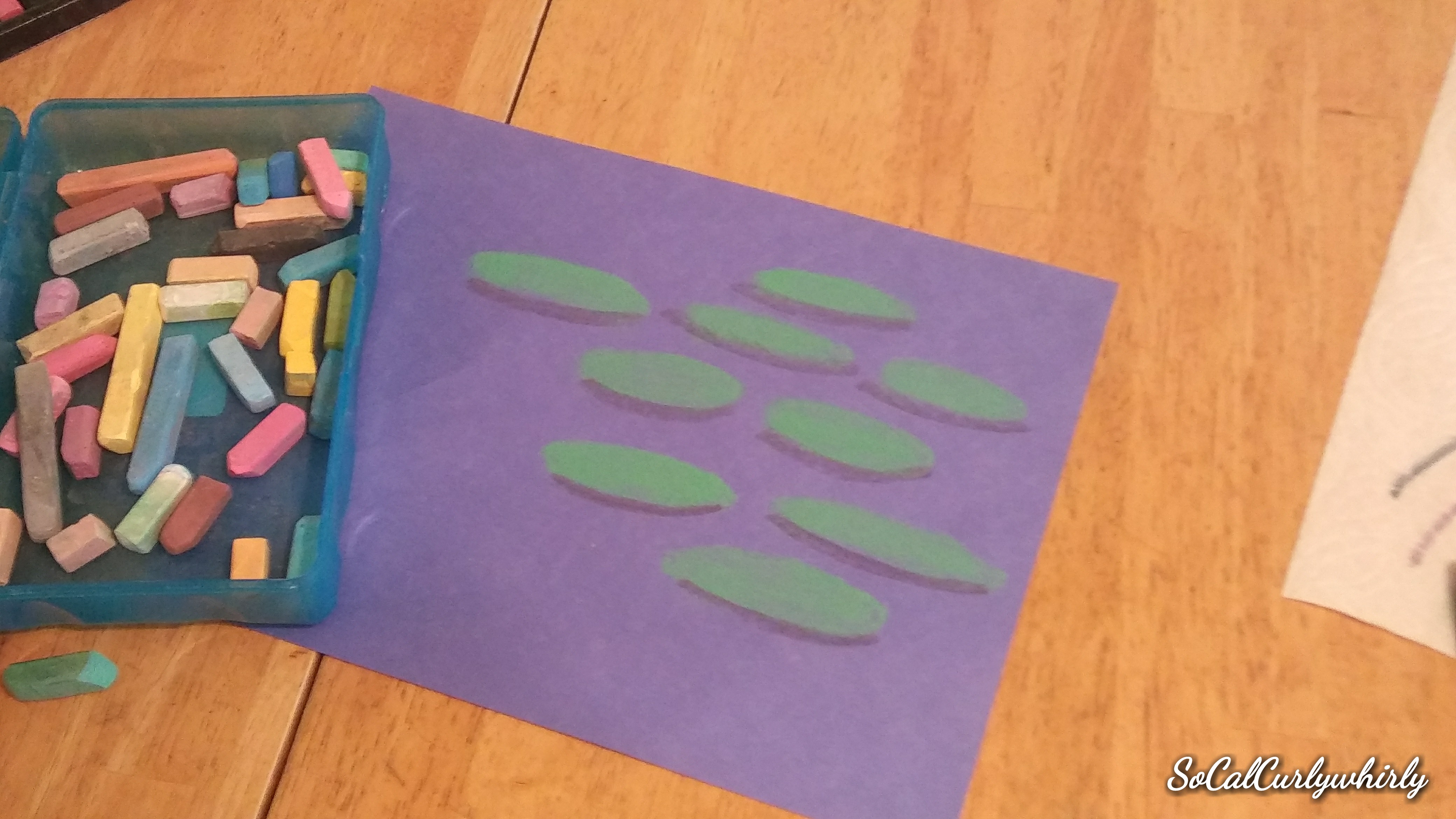
When you look at a flat circle like a lily pad from an angle it looks like an oval,  so the first step is to choose a medium green and make some small ovals grouped up on 20180219_151849_Signatureone side of your paper.

You can make smaller circles or you can go bigger for a more close up effect. As you can see in     this sample picture I made.

20180219_151954_Signature


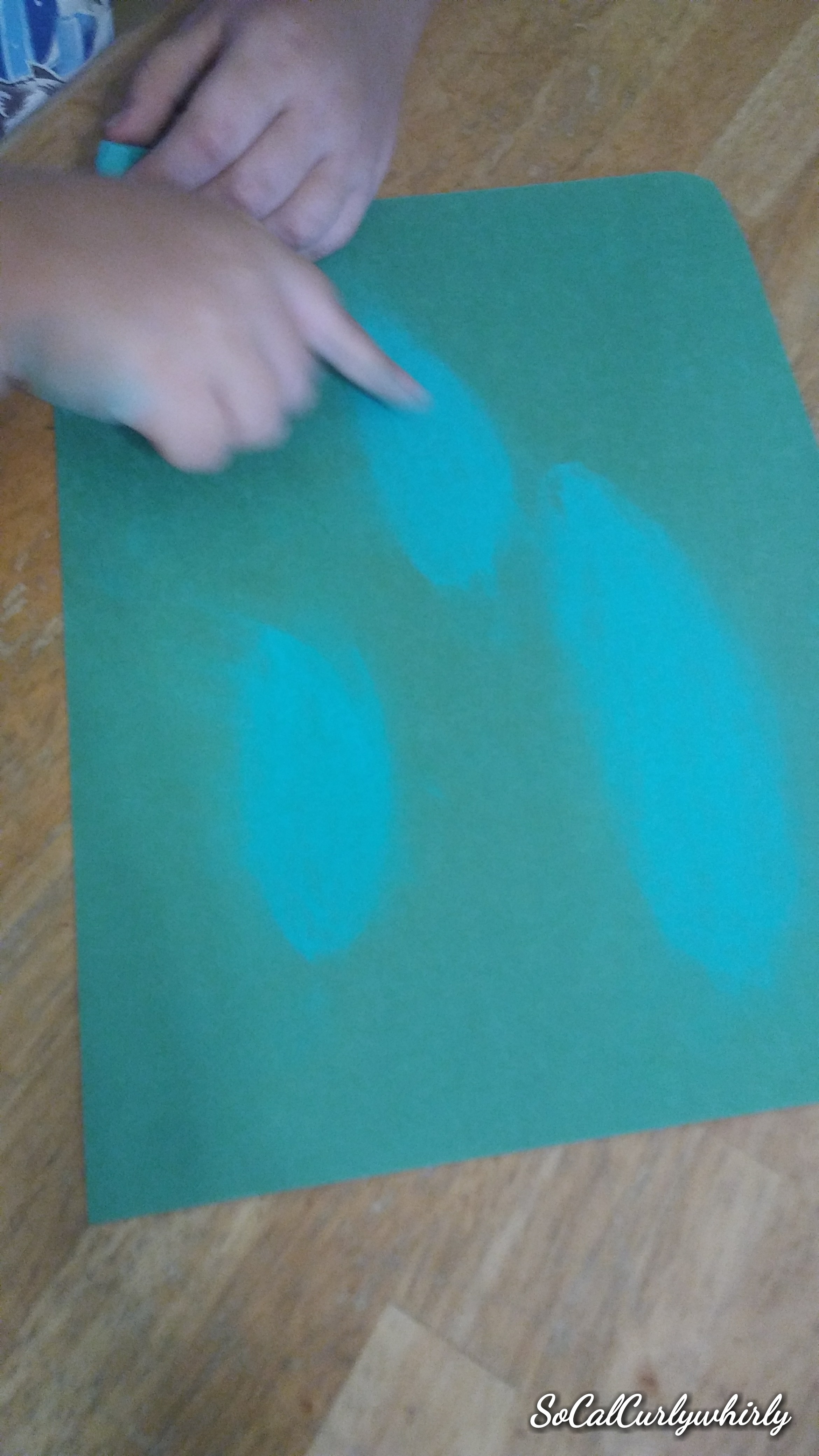
Lil Dude chose to do larger water lilies. After you color them in a bit, use your finger and blend the color into a nice green. And in the picture below you can see Lil Diva making smaller water lilies. As you blend the colors, make sure to wipe your fingers on your paper towel or you may get finger prints on your paper that are unwanted– or on your nose!

20180219_151904_Signature

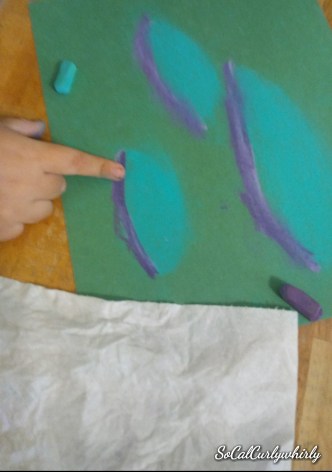
The next step is to add a darker color at the bottom of each water lily to show the shadow. On the purple paper I used a dark purple, but a dark blue would like good too.

20180219_152126_Signature Don’t worry about making everything perfect. Impressionism, the style used by Monet, isn’t about making a photo like representation of the scene, but rather about capturing the light, and the feeling of a scene.
 

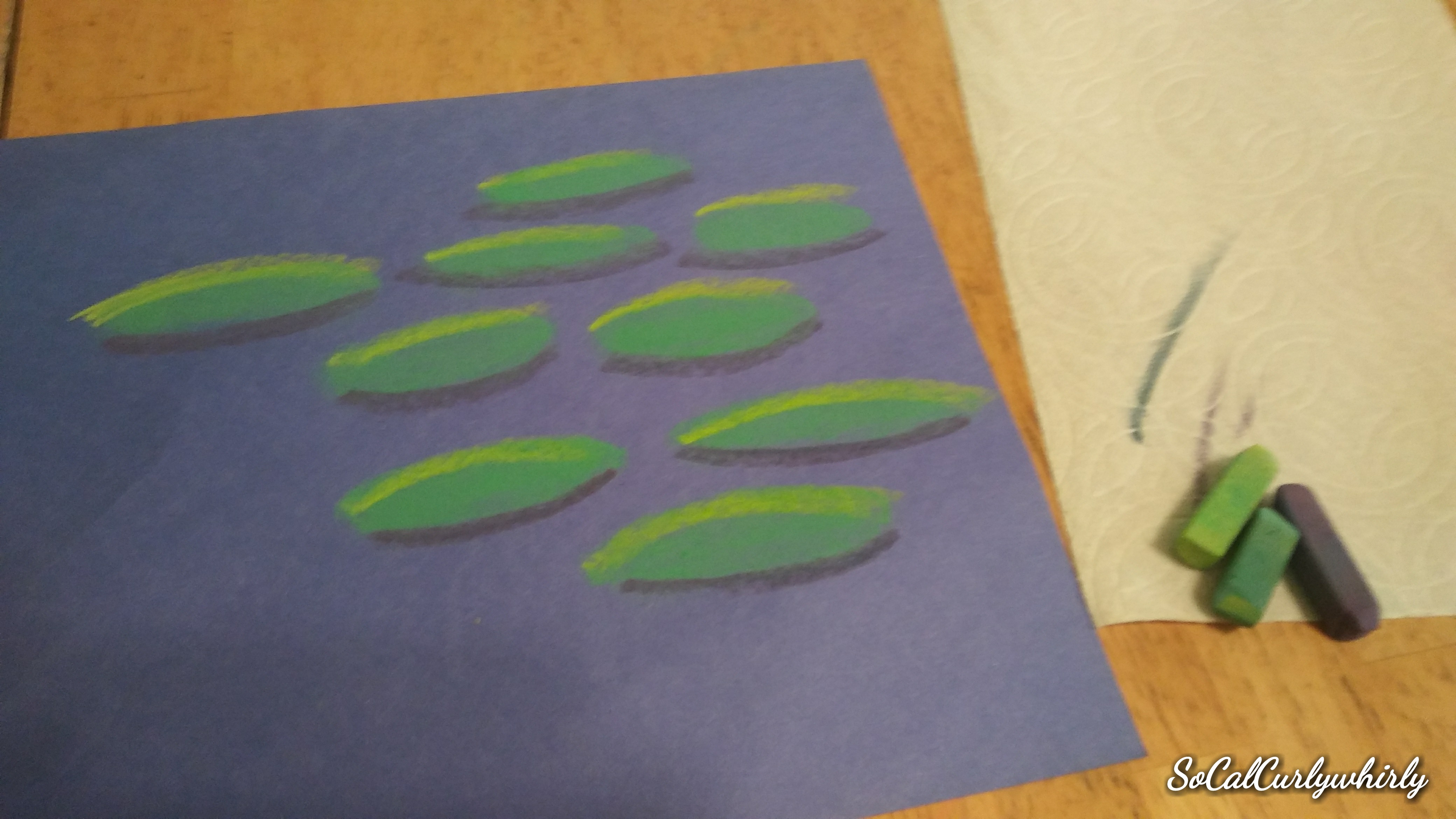
20180219_152222_signature.jpgContinue to blend the colors making sure to have soft transitions between the colors. The next step is to add a lighter green highlight to the top of each water lily where the sun touches them. Blend your colors well and enjoy how it makes the lilies look round and real. 20180219_152309_Signature


Next using white make a flower next to, or on top of one of your lilies.

20180219_152457_Signature You can use a little pale yellow and pale pink to give a little depth to your flower, just blend it in well with your finger.

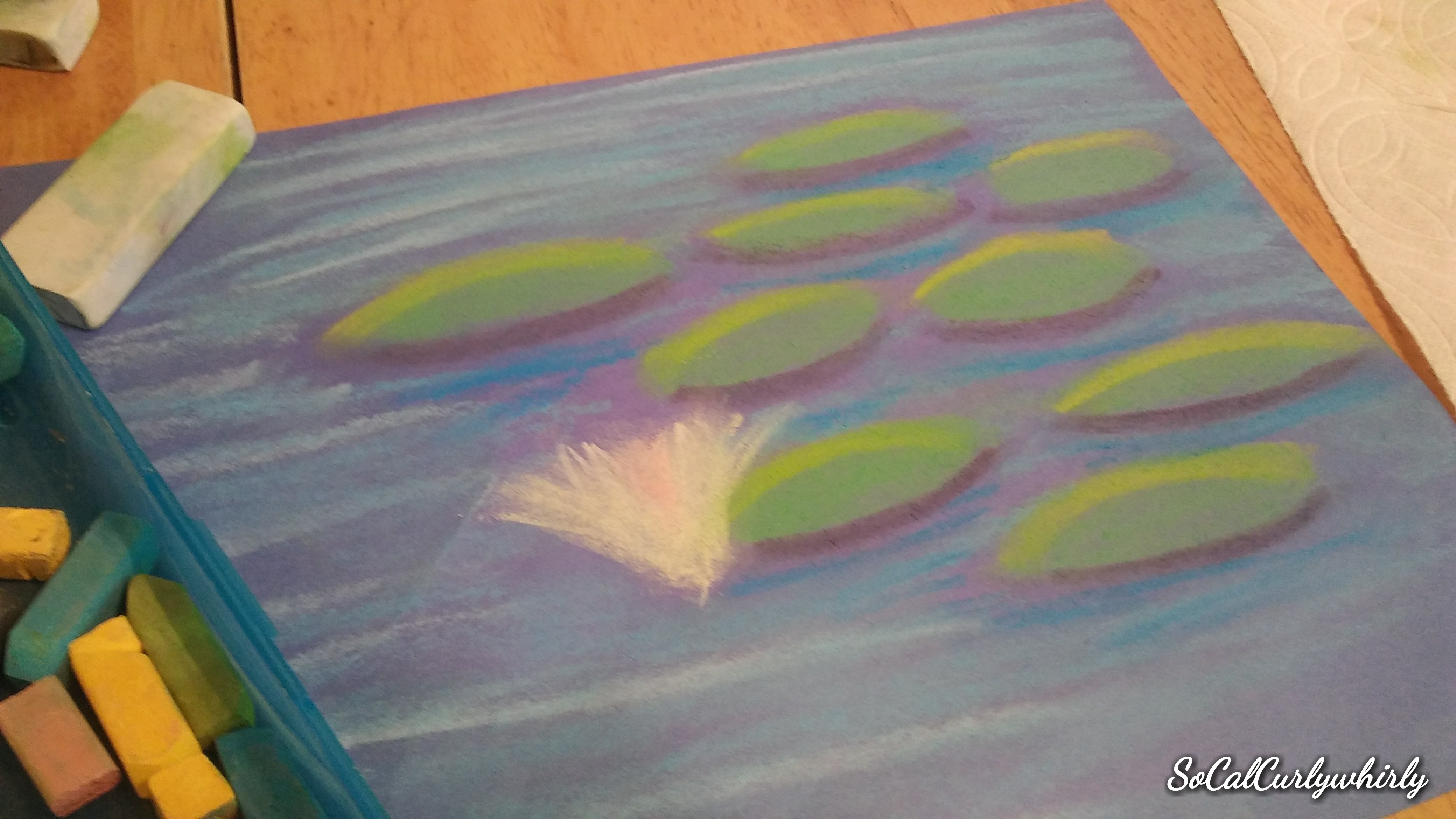


Next add blues to make the water. Straight lines going across the page will create a look of water reflecting the light, then blend the colors well so you don’t seen individual lines standing out. Use darker blues under the lilies to show shadows, and lighter blues to show where the sun is reflecting off the water.

20180219_153016_Signature

And here is my final picture! When I’m satisfied with my picture I spray it lightly with fixative so it doesn’t smear, or I keep it covered with another scratch paper until I get the fixative.

This quick lesson teaches many things– blending, light, and even a little bit of perspective.

If you try it, I would love to see your projects! Please post them in the comments or send me a private message. I would love to hear from you!


Makin my list, checkin it twice…

SONY DSCThe other day while talking to someone I found some words coming out of my mouth that I didn’t expect. I’ve been thinking about what I said ever since, and it has helped me pare down my thoughts about schooling the kids and just living our lives. Here is my thought:

It is not about finishing the curriculum or checking off the boxes. It is about developing an atmosphere, constantly moving in the right direction, and spreading the feast of life and learning for my kids. Everything else is just a tool to get there.

No longer do I have to stress and agonize over what I should do, how much “work” we should do, am I doing enough, etc. I just have to ask myself 3 simple questions and the decisions will be easy.

1) Does this help us develop the right atmosphere for love and learning in our family?

2) Does this move us in the right direction in our relationships or education?

3) Does this spread a feast of great and noble ideas, rich life experiences and loving relationships for my self and my children?

If the answer to any is yes, then I can consider it. If the answer is no to all of them, then the answer is definitely NO!

Yeah! I love clarity!

Thinking (Some More) About Scheduling Our Days

I’ve been working on our schedule some more, and reflecting on Charlotte Mason’s motto- Education is an Atmosphere, a Discipline, a Life. Trying to reconcile the truth in this motto with the rushed, jam packed, crazy thing that seems to be our life can be quite a challenge. How can I allow my kids the time they need to play house, make forts, catch frogs, see the animals in the clouds, make mud pies and just be a kid when we have 8 appointments or classes each week, in addition to taekwondo and church and grocery shopping, SCHOOL, and everything else?

I found the answer to be my educational philosophy. An educational philosophy is the goal, the form, the method, and the process we use to teach our kids. You may not agree with all the educational philosophy of Charlotte Mason, but I think its a great starting point for looking at how we can light that educational fire on our kids. One of Charlotte Mason’s principals is that children need time to be kids and think and experiment and fiddle with things in order for it to make it their own

When planning our days I try to start with the most important things. For my family this would be relationship first as it is the foundation of everything else that will follow. My younger kids are adopted and we are still working on attachment and connection. It is especially important for us that for the relationship piece of the puzzle everything be gentle and pleasant, then habits, Bible, reading instruction, writing instruction, math instruction and exposure to great literature are my priorities.

Once they can read, write and do basic math, they have all the tools they need to learn anything they want, at any time. Great literature will provide the ideas needed to fuel the fire of their minds.

Another quote I try to always keep in mind when planning our days-

Education is not the filling of a bucket, but the lighting of a fire.  ~ William Butler Yeats

How Does Home Education Measure Up?

Homeschooled: How American Homeschoolers Measure Up     Source: TopMastersInEducation.com

Gardening

We started easing into school today, and did Bible, reading instruction, and some copy work. Everyone had fun and wanted to do MORE, so I knew it was time to stop for the day. 🙂

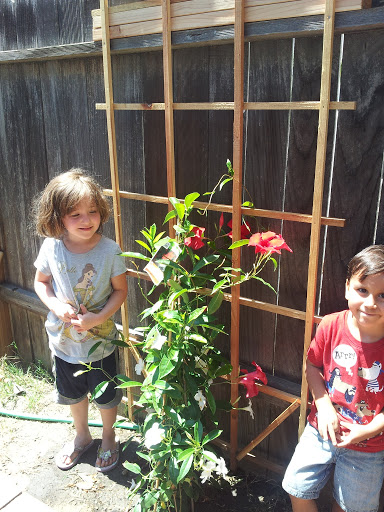
We went outside and worked in the yard for a while before it got too hot, and gave our beautiful, newly planted Mandeville plant some water.I can’t wait til it gets big enough for us to see those lovely red and white blooms from our bedroom window!

This afternoon I am trying to decide if we should take the Laguna Trolley into down to see the Sawdust Festival before it closes Sept. 1. I know the kiddies would love it, but I’m tired. We’ll see what happens!